

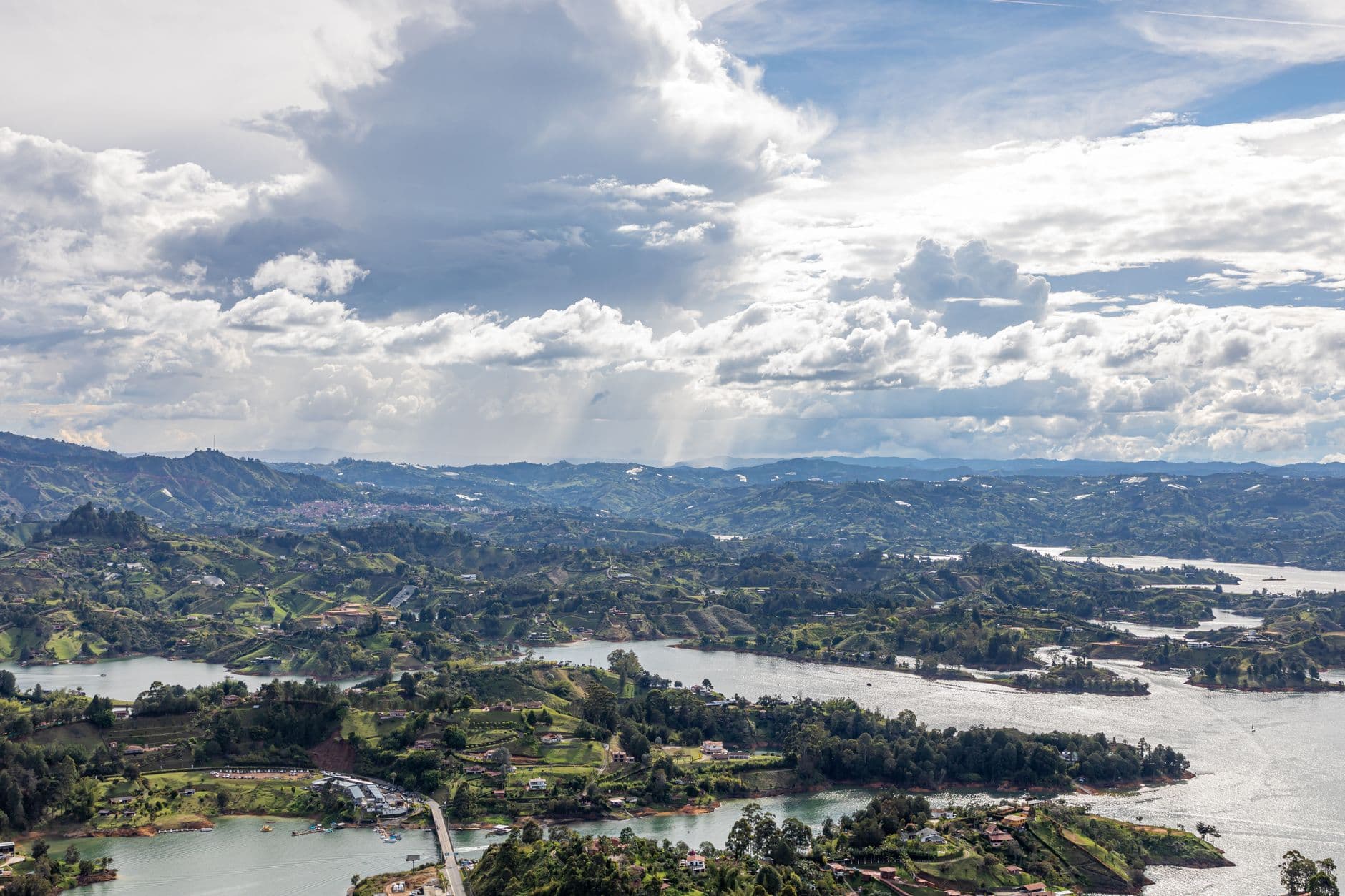
Colombia Tourist Visa for Turkey Citizens: Requirements, Fees & Process
Colombia is an enchanting destination offering vibrant streets and rich biodiversity. Learn about visa requirements and essential travel tips for Turkey citizens.
Colombia is an enchanting destination offering vibrant streets and rich biodiversity. Learn about visa requirements and essential travel tips for Turkey citizens.
Colombia Travel Guide: Comprehensive Tips for Travelers
Colombia, a country long misunderstood and often highlighted in the media for its dark side. Yet today, when you set foot here, you encounter a completely different picture: colorful streets, warm-hearted people, incredible biodiversity, and a travel experience suitable for every budget. From the cosmopolitan energy of Bogotá to the rebirth story of Medellín, from the turquoise waters of the Caribbean coast to the depths of the Amazon rainforest, Colombia offers travelers something new every time.
In this guide, we have compiled places to visit in Colombia, practical travel tips, visa information, and budget advice. Everything you need to know before going to Colombia is here.
Colombia Visa Information for Turkish Citizens
Among the Colombia travel tips, the most frequently asked question is: "Can Turkish citizens travel to Colombia without a visa?" The answer: Yes! Turkish passport holders can enter Colombia for tourism purposes without obtaining a visa. Colombia grants Turkish passport holders visa-free entry for up to 90 days.
📋 Required Documents for Entry to Colombia
- A passport valid for at least 6 months
- Return ticket or proof of onward travel
- Proof of sufficient financial resources
- Accommodation reservation (may be required)
Entry to Turkey from Colombia is also visa-free: Colombian citizens can stay in Turkey for up to 90 days for tourism purposes without obtaining any visa. This mutual visa-free agreement strengthens tourism relations between the two countries.
⚠️ Important Note
Visa exemption is only valid for tourism and short visits. If you plan to go to Colombia for work or long-term residence, you need to apply for the relevant visa type at the Colombian consulate. Also, visa exemption does not guarantee entry to Colombian territory; entry permission is at the discretion of the border officials.
Colombia's Best Tourist Attractions
When it comes to Colombia tourist attractions, the diversity offered by this country is truly astonishing. From the Caribbean coasts to the Andes mountains, from the Amazon forests to cultural city centers, there are destinations that appeal to every taste. Here are the must-see places in Colombia:
🏙️ Bogotá
The capital and largest city of Colombia. It stands out with its historic center La Candelaria, Botero Museum, Monserrate hill, and vibrant nightlife.
🌆 Medellín
Once known as the world's most dangerous city, Medellín has transformed into a city that is a global example of innovative urban renewal.
🏖️ Cartagena
This historic port city on the Caribbean coast is Colombia's most popular tourist destination with its colorful colonial architecture and stunning beaches.
☕ Coffee Region (Eje Cafetero)
This region, where world-famous Colombian coffee is grown, is a captivating destination filled with green mountains, coffee farms, and traditional villages.
🌿 Amazon Region (Leticia)
The Amazon rainforests, accessible via Leticia, offer a unique experience for nature lovers.
🏝️ San Andrés Islands
These Caribbean islands belonging to Colombia are a favorite among diving and snorkeling enthusiasts with their crystal-clear waters and coral reefs.
Bogotá: The Hidden Paradises of the Capital
Located at an altitude of approximately 2,600 meters above sea level, Bogotá may initially give the impression of a cold and gray city, but once you delve in, it holds an enchanting energy. As Colombia's political, cultural, and economic center, this city hosts millions of tourists every year.
La Candelaria: A Walk in the Heart of History
Bogotá's historic center La Candelaria, with its colonial architecture, colorful murals, and cultural institutions, is the most visited area of the city. Here you can find world-class museums such as the Colombian National Museum, Botero Museum, and Gold Museum.
Monserrate Hill
Rising above the city, Monserrate Hill is one of Bogotá's most iconic spots. You can reach the hill by cable car or hiking trail. The church at the summit and the panoramic view of the city make this visit unforgettable.
Usaquén: Bogotá's Chic Neighborhood
With its weekend antique market and chic restaurants, Usaquén is one of Bogotá's most enjoyable neighborhoods. Here you can taste local flavors and buy handmade souvenirs.
💡 Bogotá Tips
- Due to the high altitude, don't push yourself for the first 1-2 days; allow your body to acclimate.
- On Sundays, the main streets of the city are closed to vehicle traffic for the Ciclovía event and opened to cyclists and pedestrians — be sure to join.
- Avoid walking in La Candelaria at night; this area is much safer during the day.
- Bogotá's weather can be very variable; always carry a raincoat with you.
Dining in Bogotá
Bogotá is filled with restaurants offering the best examples of Colombian cuisine. Ajiaco (chicken potato soup), bandeja paisa (traditional platter), and arepa (round bread made from cornmeal) are among the local flavors you must try. In the Zona Rosa and Parque 93 areas of the city, you can find a wide range of restaurants from international cuisine to local flavors.
Medellín: A Reborn City
Medellín, a city once overshadowed by Pablo Escobar and the Medellín Cartel in the 1980s and 90s, was considered one of the most dangerous cities in the world. Today, this city has transformed into a success story of urban renewal and social innovation that is a global example. In 2013, Medellín was chosen as the "World's Most Innovative City" by the Urban Land Institute.
Plaza Botero: The Heart of Culture
Plaza Botero, Medellín's most iconic square, houses 23 different sculptures by the world-renowned Colombian painter and sculptor Fernando Botero. Born in Medellín in 1932, Botero uses fat and exaggerated figures in his works to critique the aesthetic perception of the Western world. Each sculpture in the square contains irony and criticism: "Ombre Caminante" (Walking Man), "Gato" (Cat), "Muher Fruta" (Woman with Fruit) are among the most well-known.
Plaza Botero is also a symbol of Medellín's determination to leave behind its dark period of the 80s and 90s. The city has completely transformed this square into a cultural area, sending a message to tourists to "see our innovative face as well."
Medellín Metro and Metrocable System
Medellín is the only city in Colombia with a metro system. However, the most interesting aspect is the Metrocable (cable car) system that connects the hillside neighborhoods to the city center. This system has become a tangible tool of social transformation by integrating some of the city's poorest and most dangerous areas into the center. By taking the Metrocable, you can enjoy the panoramic view of the city and experience local neighborhood life up close.
El Poblado: Medellín's Tourist Hub
The El Poblado neighborhood is where the majority of tourists visiting Medellín stay. Here you can find numerous hostels, boutique hotels, restaurants, and bars. The streets around Parque Lleras are the liveliest spot for nightlife. El Poblado is considered one of the safest neighborhoods in the city.
The Two Faces of Medellín: An Honest Assessment
Travelers visiting Medellín encounter two different faces of the city. On one hand, there is the cultural area around Plaza Botero, the modern metro system, and the touristy El Poblado neighborhood; on the other hand, there is poverty, street economy, and security issues in some areas of the city center. The Centro (center) area of the city, like in many Latin American cities, is crowded and lively during the day but an area to be cautious of at night.
⚠️ Safety in Medellín
- Do not enter the backstreets of Plaza Botero, especially at night, alone.
- Do not enter streets where the police tell you "do not enter" with a camera or valuable belongings.
- Avoid unnecessarily taking out your phone in the city center.
- Neighborhoods like El Poblado and Laureles are much safer options for tourists.
- It is generally safe to visit tourist areas during the day; however, always be aware of your surroundings.
💡 Medellín Tips
- Medellín's climate truly deserves the nickname "City of Eternal Spring"; it is mild year-round.
- Take the Metrocable to the Santo Domingo neighborhood; it offers an unforgettable experience in terms of both scenery and local life.
- Visit Plaza Botero early in the morning; it is both quieter and more suitable for photography.
- Uber and InDriver apps are actively used in the city; prefer these apps over metered taxis.
Cartagena: The Pearl of the Caribbean
Located on Colombia's Caribbean coast, Cartagena is the country's most popular tourist destination with its historic center listed as a UNESCO World Heritage site, colorful colonial buildings, and stunning beaches. The city offers a unique combination that appeals to both history and nature enthusiasts.
Getsemaní: The Neighborhood Bearing Cartagena's Soul
Getsemaní is a historic neighborhood where slaves brought here by the Spaniards from West Africa were once settled. Today, this area, with its vibrant street art, colorful murals, local restaurants, and authentic Caribbean atmosphere, is one of Cartagena's most unique corners. Exploring these streets during the day is the best way to feel the true spirit of the city.
Bazurto Market: Chaotic Yet Captivating
Cartagena's Bazurto Market is one of the city's most chaotic and authentic spots. Here you can find fresh tropical fruits, vegetables, fish, and local products. The market is at its busiest in the early morning. Avocado, mango, platano (plantain), yuka, and countless tropical fruit varieties are among the market's staples.
💡 Bazurto Market Tips
- Go early in the morning; the market is at its liveliest.
- Avoid unnecessarily taking out your phone.
- Always negotiate prices; tourists may be quoted higher prices.
- If you have a guide or a local with you, you will have a much more comfortable experience.
Cartagena's Beaches and Islands
The Rosario Islands near Cartagena, with their crystal-clear waters and coral reefs, are a favorite among diving and snorkeling enthusiasts. Day trips are organized to these islands, which can be reached by boat tours from the city center. Playa Blanca stands out as one of the most beautiful beaches in the area.
Accommodation in Cartagena
Accommodation options in Cartagena are quite diverse. In the historic center, there are boutique hotels and colonial-style accommodations. The Boca Grande area is a tourist area with more modern hotels. Renting apartments through Airbnb offers a much more economical option, especially for long-term stays.
Budget and Prices in Colombia
Colombia is a budget-friendly destination for Turkish travelers. When the Colombian Peso (COP) is compared to the Turkish Lira, especially when it comes to local products and services, you encounter very affordable prices. As a general rule: 1 US Dollar is approximately equivalent to 4,000 Colombian Pesos (this rate may vary; check the current rate before traveling).
📊 Approximate Prices in Colombia (in USD)
| Product / Service | Approximate Price (USD) |
|---|---|
| Hostel dorm bed (per night) | 8–15 USD |
| Airbnb apartment (per night, for 2 people) | 20–35 USD |
| Lunch at a local restaurant (menu) | 3–6 USD |
| Street food (arepa, empanada, etc.) | 0.5–1.5 USD |
| Beer (local, 330 ml) | 1–2 USD |
| Water (500 ml) | 1.5–2 USD |
| Olive oil (1 liter, supermarket) | 4–5 USD |
| 30 eggs (supermarket) | 4 USD |
| Canned tuna | 1.5–2 USD |
| City metro / bus | 0.5–1 USD |
| Coffee (at a café) | 2–4 USD |
| Fresh fruit juice (street stall) | 1–2 USD |
Withdrawing Money and Payments in Colombia
ATMs are widely available in major cities. However, daily withdrawal limits at ATMs can be low; you may need to make withdrawals from multiple ATMs. Credit cards are accepted at major restaurants and hotels, but cash is preferred at local markets and small businesses. When exchanging currency, prefer exchange offices in the city center over the airport; the rate is usually better.
💡 Budget Tips
- Local supermarket chains like D1 and Ara offer much more affordable prices compared to large markets.
- For lunch, choose the local "menú del día" (menu of the day) option; it usually includes soup, a main course, and a drink for 3–5 USD, offering a satisfying meal.
- Renting an apartment with a kitchen on Airbnb provides significant savings, especially for stays longer than a week.
- Use the metro and Metrocable system for city transportation; it is much more economical compared to taxis.
- Tropical fruits (mango, avocado, maracuyá) are much cheaper and fresher in local markets compared to supermarkets.
Safety Tips in Colombia
Colombia has long been portrayed in the media as a dangerous country. The truth is: yes, there are regions and situations where you need to be cautious about safety. However, this is also true for many major cities around the world. When you take the right precautions, Colombia offers a very enjoyable and safe travel experience.
General Safety Rules
🔒 Golden Rules for Safe Travel in Colombia
- Do not carry valuable items visibly: Expensive cameras, phones, and jewelry can make you a target. Be especially careful in crowded and non-touristic areas.
- Avoid walking alone at night: Especially in city centers and non-touristic neighborhoods, walking alone at night can be risky.
- Listen to local warnings: When hotel staff, hostel employees, or local guides tell you which areas to avoid, take these warnings seriously.
- Use apps instead of taxis: Prefer apps like Uber, InDriver, or Cabify over taxis hailed from the street.
- Be cautious at ATMs: Avoid withdrawing money from isolated ATMs at night; if possible, use ATMs in shopping centers during the day.
- Carry a photocopy of your passport: Leave your original passport at the hotel and carry a photocopy with you.
- "Scopolamine" warning: There are reports of cases in Colombia where drugs (scopolamine) are mixed into drinks or cigarettes offered to foreigners. Do not accept drinks or cigarettes from strangers.
- Be cautious about sharing your location on social media: Real-time location sharing can make you a target.
Safety Situation by Region
Not all regions of Colombia have the same level of safety. Tourist neighborhoods in major cities (El Poblado, Laureles, Usaquén, certain parts of La Candelaria) are generally safe. However, some city center areas and rural regions require more caution. We recommend checking the latest travel advisories from the Ministry of Foreign Affairs before your trip.
Is Colombia Really Dangerous?
The majority of travelers visiting Colombia find the country much safer and more hospitable than they expected. In cities, people are generally warm and helpful towards foreigners. When you follow basic safety rules and heed local warnings, Colombia offers a very enjoyable travel experience. Instead of exaggerated fear, a conscious caution is the best approach.
General Tips for Traveling in Colombia
Best Time to Visit
Colombia's climate varies greatly from region to region. Generally, December–March and July–August are considered the periods with the least rainfall and the most suitable time for travel. However, due to Colombia's tropical climate, it can rain throughout the year; don't forget to always carry a raincoat with you.
Transportation
Bogotá El Dorado International Airport is the main entry point to Colombia. There are no direct flights from Istanbul to Colombia; usually, there are connecting flights via Madrid, Amsterdam, Miami, or Bogotá. Domestic flights within the country are both fast and relatively affordable; consider domestic flights for distant destinations.
Language
The official language of Colombia is Spanish. In the tourist areas of major cities, you may encounter English speakers, but knowing Spanish is a great advantage in local markets and non-touristic neighborhoods. Learning basic Spanish phrases not only facilitates communication but also helps you build warmer relationships with the locals.
💡 Useful Spanish Phrases
- ¿Cuánto cuesta? — How much?
- ¿Dónde está...? — Where is...?
- Un café, por favor. — A coffee, please.
- ¿Es seguro aquí? — Is it safe here?
- No entiendo. — I don't understand.
- ¿Me puede ayudar? — Can you help me?
- La cuenta, por favor. — The bill, please.
Health and Vaccinations
It is recommended to get a yellow fever vaccination before traveling to Colombia; this vaccination may become mandatory if you plan to visit the Amazon region or tropical areas. Consult your doctor for malaria prophylaxis. Avoid drinking tap water in Colombia; always prefer bottled water.
Colombian Cuisine: Must Try
- Arepa: A round bread made from cornmeal, which can be filled with cheese or meat. You can find it in every corner of Colombia.
- Bandeja Paisa: A traditional platter consisting of beans, rice, minced meat, chorizo, chicharrón, egg, avocado, and arepa. Known for its heartiness.
- Ajiaco: A traditional soup made with chicken and three different types of potatoes, specific to Bogotá.
- Empanada: A fried pastry filled with meat or cheese. Sold everywhere as street food.
- Sancocho: A hearty soup made with meat, cassava, corn, and vegetables.
- Patacón: Flattened and fried green plantain. Served as a side dish with many meals.
- Colombian Coffee: Considered one of the world's finest coffees, don't miss the opportunity to drink fresh Colombian coffee, especially in the Coffee Region.
- Limonada de Coco: Coconut lemonade. It's like a lifesaver in the heat of Cartagena.
Internet and SIM Card in Colombia
Claro, Movistar, and Tigo are the main mobile operators in Colombia. You can easily purchase a local SIM card at the airport or operator stores in city centers. Prices are quite affordable; you can usually obtain a SIM card with a monthly data package for 5–10 USD. In major cities, 4G coverage is extensive, but the signal may weaken in rural areas.
Transportation Apps in Colombia
In Colombia, Uber, InDriver, and Cabify apps are widely used for city transportation. Choosing these apps over taxis hailed from the street is advantageous in terms of both safety and pricing. In Medellín, the metro and Metrocable system is the most practical and economical way for city transportation.
Are You Ready for Your Trip to Colombia?
Colombia, a misunderstood but incredibly captivating country. Pausing in front of the sculptures of Plaza Botero to decipher Fernando Botero's irony towards Western aesthetics, looking at the panoramic view of the city from Medellín's Metrocable, getting lost in the colorful streets of Cartagena, or being swept away by the chaotic energy of Bazurto Market — these are all unique experiences offered by Colombia.
As Turkish citizens, we can enter this country without a visa, which is kind to our wallets with its budget-friendly prices and captures our hearts with its warm-hearted people, making it a top destination on your Latin America travel list.
You Might Also Be Interested In

New Zealand Tourist Visa for Turkey Citizens: Requirements, Fees & Process
Turkey citizens traveling to New Zealand need a visa, obtainable from the embassy before departure. This guide provides essential information on requirements and application procedures.
ESTA vs US Visa: Which Countries Can Use ESTA and What Should Turkish Citizens Do?
Not sure where to start? Get a free pre-evaluation.
Comments
Be the first to share your experience
No one has reviewed this yet.