

Get Consultancy for Ethiopia Visa
Independent consultancy • Free initial evaluation
Ethiopia Tourist Visa for Algerian Citizens: Requirements, Fees & Process
Discover the visa requirements for Algerian citizens traveling to Ethiopia, including fees and application steps.
About this route
This guide covers the official Ethiopia entry process for Algeria passport holders: required documents, the application steps, and where our optional support fits in.
Algerian citizens require a visa to visit Ethiopia. Fortunately, the process is straightforward with options like e-Visa or Visa on Arrival.
Does Ethiopia Require a Visa for Algerian Citizens?
Yes, citizens carrying an Algerian passport need a visa to travel to Ethiopia. However, the process is much easier than you might think: Algerian nationals can benefit from the Visa on Arrival privilege or apply for an e-Visa online before traveling. Both options are valid only if entry is made through Addis Ababa Bole International Airport.
An Overview of Ethiopia
Located in the horn of Africa, Ethiopia hosts one of the oldest and most established civilizations on the continent. With a population of approximately 92 million and an area of 1,104,300 km², it is the second most populous country on the continent. The capital, Addis Ababa, holds an important position on the international stage as the headquarters of the African Union. The official language is Amharic, but over 80 languages are spoken throughout the country. The currency is the Ethiopian Birr (ETB); 1 Algerian Dinar is approximately 0.24 ETB. The average temperature hovers around 23°C throughout the year, making the country visitable in any season.
Ethiopia is one of the most fascinating destinations in the world, with the rock churches of Lalibela on the UNESCO World Heritage list, the ancient Axum obelisks, the unique cultural texture of the Omo Valley, and the Simien Mountains National Park. The journey from Algeria to these ancient lands offers a very rich experience both historically and culturally.
Visa Options for Algerian Nationals
Algerian citizens have two main visa options when traveling to Ethiopia: e-Visa (Electronic Visa) and Visa on Arrival. Each method has its own unique advantages and limitations. Below, we examine these two options in detail.
e-Visa: Recommended and Most Practical Method
The Ethiopian e-Visa is a type of digital visa applied for online before travel and sent via email once approved. Eliminating the need to wait in long queues and offering more flexibility, the e-Visa is a much-preferred option compared to the visa on arrival. Applications are made through the official e-Visa portal of the Ethiopian Ministry of Foreign Affairs: Official Website
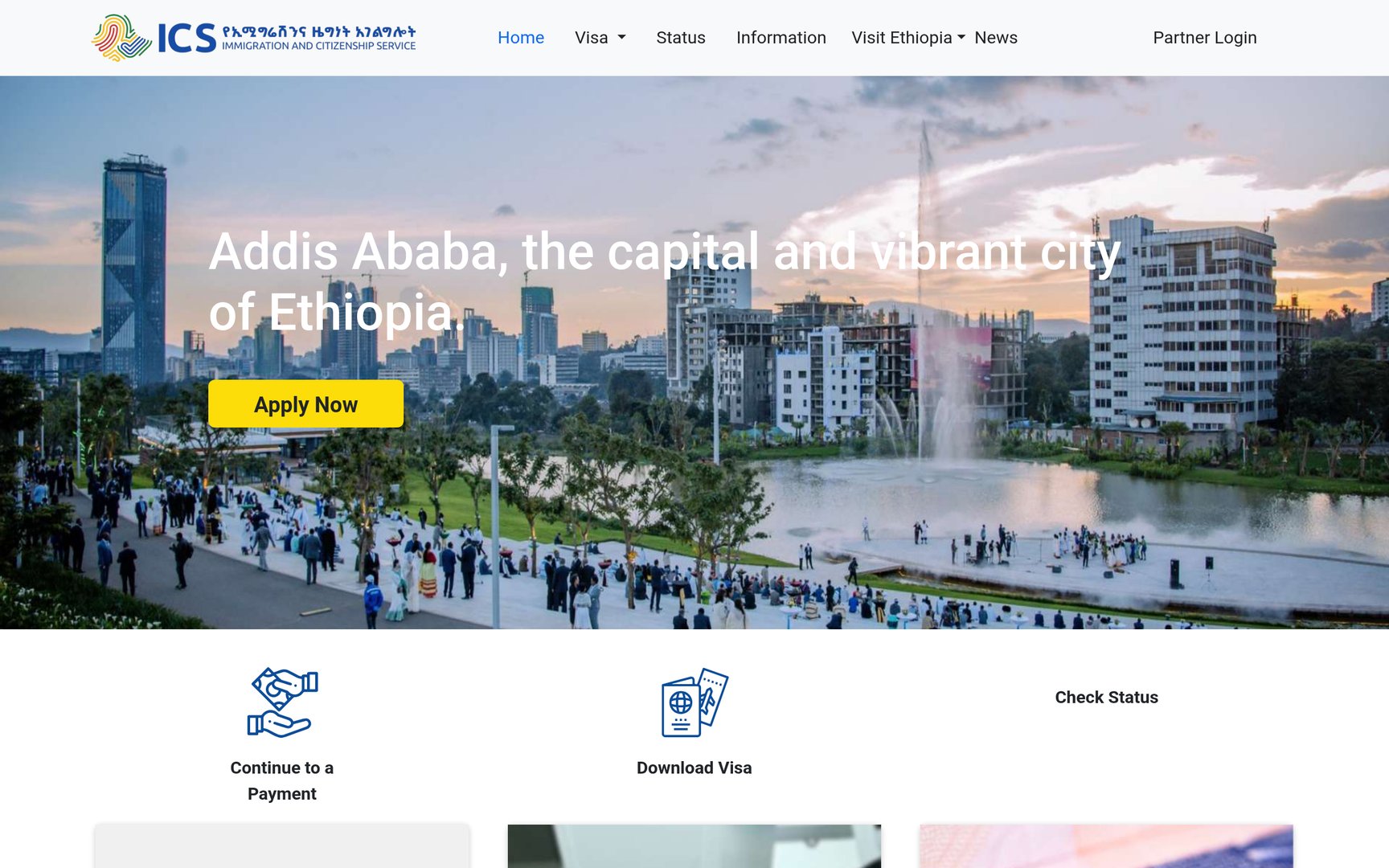
There are 30-day or 90-day single-entry options available for e-Visa applications. The application process is usually completed within 24 to 72 hours; in most cases, approval comes within 24 hours if all documents are submitted completely. The approved visa is sent to your email address in PDF format, and it is sufficient to print it out and carry it with you on your trip.
Visa on Arrival: Alternative Option
The Visa on Arrival can be obtained from the visa counters at Addis Ababa Bole International Airport upon landing. This option issues a single-entry 3-month (90-day) visa. Payment is accepted only in USD, EUR, GBP, and CAD; payment cannot be made with Algerian Dinar or Ethiopian Birr. Considering that passengers who have not applied for an e-Visa in advance may have to wait in long queues at the airport, we recommend that you think carefully before choosing this option.
Other destinations for Algeria passport holders
You can apply yourself.
This guide covers the full official process step by step. Honesty builds trust. If you have questions, you can reach us through the contact options above.
Visa Fees and Validity Periods
The fees required for an Ethiopian visa vary depending on the type of visa selected and the length of stay. The table below summarizes the current visa fees and validity periods:
| Visa Type | Entry Type | Maximum Stay Duration | Application Fee (USD) |
|---|---|---|---|
| Tourist / Business e-Visa | Single Entry | 30 Days | $72 |
| Tourist / Business e-Visa | Multiple Entry | 90 Days | $202 |
| Tourist / Business e-Visa | Multiple Entry | 6 Months | $402 |
| Visa on Arrival | Single Entry | 90 Days | Paid at the airport |
Note that visa fees are non-refundable. Even if your application is rejected, the fee you paid cannot be refunded. Therefore, it is of great importance to be extremely careful when filling out the application form. Also, the validity period of the visa starts from the date of entry into Ethiopia.
Required Documents
The documents you need to prepare for an Ethiopian e-Visa or visa on arrival application are explained in detail below. Having all documents complete and accurate is critical for your application to be processed quickly and smoothly.
| Document | Details |
|---|---|
| Valid Passport | A passport with at least 6 months validity from the date of entry into Ethiopia. It must have at least 2 blank visa pages. |
| Passport Scan | A color scanned copy of the page containing your passport's identity information (for e-Visa application). |
| Passport Photo | A digital passport-sized photo that is not older than 6 months, in color, with a white background. |
| Return Ticket | A flight ticket or reservation document showing your departure from Ethiopia. |
| Yellow Fever Vaccination Card | A Yellow Fever vaccination certificate is mandatory if you are transiting through yellow fever endemic regions. It is also recommended for those traveling directly from Algeria. |
| Bank Statement | A current and bank-certified account statement for visa on arrival. The account holder's name, balance, and date must be clearly visible. |
| Online Application Form | The application form on the e-Visa portal must be filled out completely and accurately (for e-Visa only). |
Step-by-Step e-Visa Application Process
The application process for an Ethiopian e-Visa is quite simple and user-friendly. By following the steps below, you can easily complete your application:
Step 1: Access the Official Portal
You must use only the official government portal for the Ethiopian e-Visa application. Applications made through third-party websites may include additional fees and pose security risks. The official portal address: Official Website
Step 2: Choose the Visa Type
After logging into the portal, select the visa type that suits your travel purpose. Choose the Tourist Visa for holidays or tourist visits, and the Business Visa option for business meetings or travel. Then determine the 30-day or 90-day stay duration.
Step 3: Fill Out the Application Form
Complete the application form with your personal information, passport details, and travel plans. All information on the form must exactly match the data on your passport. Even the smallest error in your name, surname, date of birth, or passport number can lead to the rejection of your application.
Step 4: Upload Documents
Upload the color scanned copy of your passport and your passport photo to the system. Ensure that the photo is white background, clear, and not older than 6 months. The scanning quality must be high (at least 300 DPI) for document readability.
Step 5: Make the Payment
Pay the application fee online using a credit card or debit card. The payment process is conducted over a secure SSL connection. Once payment confirmation is received, your application is processed. Be sure to save the payment receipt.
Step 6: Wait for Approval and Receive Your Visa
Your application is usually processed within 24 to 72 hours. The approved visa is sent in PDF format to the email address you specified during the application. You must print this document and carry it with you throughout your trip. At the airport, you will be asked to present both your printed visa and your passport at passport control.
Passport Requirements and Considerations
Algerian citizens traveling to Ethiopia must have passports that are valid for at least 6 months from the date of entry into Ethiopia. This rule applies to both e-Visa and visa on arrival. Be sure to check the validity of your passport before planning your trip; if necessary, start the renewal process in time.
In addition, your passport must have at least 2 blank visa pages. The pages must be completely blank, meaning they must not have any stamps or marks. If your passport pages are full or about to be full, we recommend that you obtain a new passport before traveling.
Health Requirements and Vaccinations
Taking certain health precautions before traveling to Ethiopia is both a requirement and of great importance for your personal safety. The Yellow Fever vaccination is mandatory for travelers transiting through yellow fever endemic regions. It is also strongly recommended for those traveling directly from Algeria. You must carry your vaccination card with you throughout your trip.
It is also recommended that your Polio vaccination is up to date. In addition, we advise you to consult with your travel doctor about malaria prophylaxis, typhoid, hepatitis A and B, and rabies vaccinations. There is a risk of malaria in some parts of Ethiopia; especially if you are traveling to low-altitude and rural areas, do not neglect to take the necessary precautions.
Currency and Financial Preparation in Ethiopia
The official currency of Ethiopia is the Ethiopian Birr (ETB). The exchange rate between the Algerian Dinar (DZD) and the Ethiopian Birr is approximately 1 DZD = 0.24 ETB. Currency exchange transactions in Ethiopia can be conducted at official banks and authorized exchange offices; exchanging currency through street vendors or unofficial channels is both illegal and dangerous.
While credit cards are accepted in major hotels and shopping centers in Addis Ababa, cash is preferred in rural areas and small businesses. It is recommended to carry a sufficient amount of US Dollars (USD) or Euros (EUR) for your trip and convert them to local currency in Ethiopia. We would like to remind you that the visa on arrival fee must also be paid in USD, EUR, GBP, or CAD.
Customs Regulations and Considerations in Ethiopia
Compliance with customs regulations is mandatory when entering Ethiopia. There are certain limitations on the amount of currency that can be brought into the country; amounts of 3,000 USD and above must be declared at customs. It is forbidden to take Ethiopian Birr out of the country. Specific exemption limits apply for alcoholic beverages, tobacco products, and personal use items.
Due to Ethiopia's rich cultural heritage, it is strictly forbidden to take antiques, historical artifacts, or objects of cultural significance out of the country, and severe penalties may be encountered. The transportation of wildlife products and materials belonging to endangered species is also prohibited under international agreements.
Main Places to Visit in Ethiopia
Ethiopia offers an extraordinary diversity that appeals to all kinds of travelers. Lalibela is known as the eighth wonder of the world with its unique rock-hewn churches from the 12th century. Axum, the capital of the ancient Axum Empire, captivates visitors with its giant obelisks and historical treasures. Gondar, with its medieval castle and palaces, earns the nickname "Africa's Camelot".
Simien Mountains National Park is a magnificent natural paradise on the UNESCO World Heritage list, home to the unique Gelada monkeys and Ethiopian wolves. Omo Valley is a unique destination for anthropology and culture enthusiasts, hosting dozens of different ethnic groups that maintain traditional lifestyles. The capital, Addis Ababa, offers visitors an unforgettable city experience with Africa's largest open-air market, Merkato, world-class museums, and a vibrant music scene.
Transportation and Accommodation in Ethiopia
Ethiopia's domestic transportation network has significantly improved in recent years. Ethiopian Airlines, as Africa's largest and most prestigious airline, connects major cities within the country. Regular domestic flights are available from Addis Ababa to tourist destinations such as Lalibela, Gondar, Axum, and Dire Dawa. For urban transportation, minibuses, tuk-tuks, and increasingly popular ride-hailing apps are used.
In terms of accommodation options, Ethiopia offers choices suitable for every budget. In Addis Ababa, international chain hotels such as Sheraton Addis, Hilton Addis Ababa, and Radisson Blu are available. In historic cities like Lalibela and Gondar, boutique hotels and guesthouses allow you to experience the local culture up close. We recommend making your accommodation reservations in advance during the busy travel season from October to February.
Safety and General Travel Advice in Ethiopia
While Ethiopia is generally a safe destination for tourists, caution is required in some areas. We recommend following current travel advisories before traveling to areas near the Somali border, the Tigray region, and some border areas. Regularly checking the official travel advisories of the Algerian Ministry of Foreign Affairs will protect you from potential risks.
In Addis Ababa, pickpocketing incidents can occur in areas where tourists are concentrated. Keep your valuables secure, be cautious in crowded places, and avoid walking alone at night. Hiring a local guide will not only enhance your safety but also allow you to explore Ethiopia's rich culture more deeply.
In Ethiopia's high-altitude regions, especially in Addis Ababa (approximately 2,355 meters above sea level), altitude sickness symptoms may occur. Avoid strenuous physical activities in the first days of your arrival, drink plenty of water, and give your body time to acclimate to the new altitude.
Cultural Sensitivities and Local Traditions in Ethiopia
Ethiopia has a deeply rooted cultural and religious heritage. The majority of the population adheres to Ethiopian Orthodox Christianity or Islam. When visiting religious sites, it is expected that you wear appropriate clothing, cover your head, and remove your shoes. Always ask for permission before taking photographs in mosques and churches.
Hospitality is extremely important in Ethiopia. Accepting an invitation to an Ethiopian's home is a great sign of respect. The traditional coffee ceremony (Buna) is an integral part of Ethiopian culture; participating in this ceremony is both a social experience and provides a deep understanding of the country's coffee culture. Knowing that Ethiopia is the birthplace of coffee and produces some of the world's finest coffees makes this experience even more meaningful.
Bargaining is a common practice, especially in markets and small shops. However, maintaining a respectful and polite attitude while bargaining will not only help you get better prices but also help you establish positive relationships with the locals. The tipping culture is becoming increasingly common in Ethiopia; leaving a tip of 10-15% in restaurants and hotels is appreciated.
Flight Options from Algeria to Ethiopia
Direct flight options are available between the Algerian capital Algiers (ALG) and the Ethiopian capital Addis Ababa (ADD). Ethiopian Airlines operates regular flights on this route. For connecting flights, travel can also be made through transit points such as Cairo, Dubai, Nairobi, or Istanbul. The flight duration is approximately 6-7 hours on direct connections, while it varies depending on the layover time for connecting flights.
Booking your flight tickets as early as possible will make it easier for you to find more affordable prices and choose your preferred seating arrangements. Especially during the Ethiopian New Year (Enkutatash) celebrations in September and the Timkat (Epiphany) festival period, flight and accommodation prices increase significantly.
Common Mistakes in Visa Applications and How to Avoid Them
One of the most common issues encountered in Ethiopian visa applications is incorrectly entering passport information. Even the smallest typo in basic information such as name, surname, passport number, or date of birth can lead to the rejection of your application. Before filling out the form, have your passport with you and enter all information by comparing it one by one.
Another common mistake is not meeting photo requirements. The uploaded photo must be white background, clearly taken, and not older than 6 months. Photos with sunglasses, hats, or where most of the face is hidden are not accepted. It is also crucial that the passport scan is of sufficient quality and that all information is readable.
Finally, applying too close to the travel date is another frequently encountered mistake. Although the e-Visa is generally processed within 24-72 hours, unexpected delays can occur. Completing your application at least 5-7 business days before your travel date will provide you with sufficient buffer time against potential disruptions.
What are the visa rules for Addis Ababa?
Visa rules do not change by city; the same conditions apply across Ethiopia: visa on arrival, including Addis Ababa and every other point of entry.
Other frequently visited cities: Lalibela.
Final Checklist for Ethiopian Visa Application
Before your trip, review the checklist below to ensure that all your preparations are complete. Verify that your valid passport has at least 6 months validity and at least 2 blank pages. If you have completed the e-Visa application, ensure that you have received the approval email and printed the document. Check that you have prepared your Yellow Fever vaccination card and placed it in your travel bag. Keep your return ticket and accommodation reservations with you. If you are using a visa on arrival, make sure you have prepared enough USD, EUR, GBP, or CAD cash. Confirm that you have taken out travel insurance and that your policy covers Ethiopia.
Country Information
Popular Cities
Arrive prepared for the Ethiopia visa on arrival
Let's review the documents and fee required at the border before you travel, and book your flight and hotel here.
Free pre-assessment